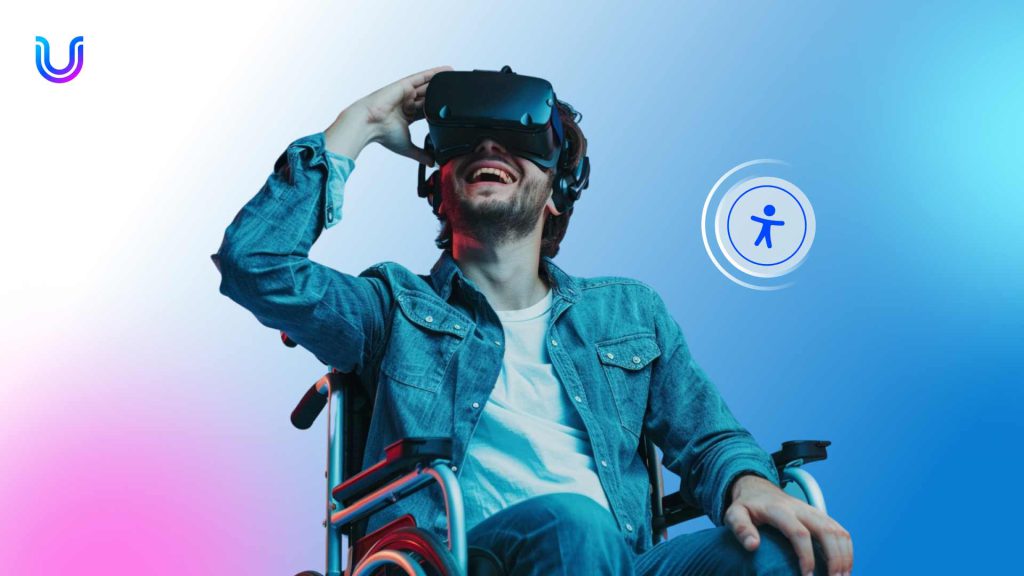
Understanding Extended Reality: AR, VR, and MR
Understanding Extended Reality: AR, VR, and MR Introduction: The Rise of Immersive Technology Extended Reality (XR) is an umbrella term that brings together Augmented Reality (AR), Virtual Reality (VR), and Mixed Reality (MR). These immersive technologies blend digital elements with the physical world or create entirely new digital environments. Today, XR is transforming: This article
How immersive technologies are reshaping education, training, and real-world interaction.


Introduction: The Rise of Immersive Technology
Extended Reality (XR) is an umbrella term that brings together Augmented Reality (AR), Virtual Reality (VR), and Mixed Reality (MR). These immersive technologies blend digital elements with the physical world or create entirely new digital environments.
Today, XR is transforming:
- Education
- Training
- Medicine
- Engineering
- Architecture
- Entertainment
- Workplace collaboration
This article explains what AR, VR, and MR are — how they differ, how they work, and how they reshape real-world interaction.
1. What Is Extended Reality (XR)?
XR = AR + VR + MR
It represents any technology that modifies our perception of reality.
The XR Spectrum
- AR → Adds digital elements onto the real world
- MR → Blends digital objects into the real world, allowing interaction
- VR → Replaces the world entirely with a digital environment
Extended Reality technologies extend human capabilities by merging physical and digital experiences.
2. Augmented Reality (AR): Enhancing the Real World
Augmented Reality overlays digital content on top of the physical environment.
Common AR Experiences
- Pokémon Go
- Snapchat/Instagram filters
- Google Maps AR walking directions
- Mobile AR shopping apps
- Industrial AR instructions in factories
How AR Works
AR typically uses:
- Smartphone cameras
- AR glasses
- SLAM (Simultaneous Localization and Mapping)
- Sensors + GPS
- Computer vision
These technologies identify the environment and anchor digital graphics onto it.
AR in Education & Training
- Interactive textbooks with 3D models
- AR flashcards for anatomy, astronomy, biology
- Real-time language translations on glasses
- Step-by-step repair instructions for technicians
AR increases engagement and makes learning more dynamic and visual.
3. Virtual Reality (VR): Entering Fully Digital Worlds
Virtual Reality creates an immersive, computer-generated environment where users can explore and interact.
VR Devices
- Meta Quest
- PlayStation VR
- HTC Vive
- Valve Index
What VR Offers
- 360° environments
- Full sensory immersion
- Spatial audio
- Hand tracking and motion controllers
This makes VR ideal for training simulations and deep learning experiences.
VR in Education & Training
- Medical students practicing surgeries
- Pilots using VR flight simulators
- Firefighters training for emergency scenarios
- Students exploring historical worlds or space
Instead of reading about an environment, learners can step inside it.
4. Mixed Reality (MR): Blending Digital and Physical Worlds
MR goes beyond AR by anchoring digital objects in the real world, allowing real-time interaction with them.
Devices That Support MR
- Microsoft HoloLens
- Magic Leap
- Advanced AR headsets
MR Capabilities
- Real-time environment understanding
- 3D spatial mapping
- Hand, eye, and gesture tracking
- Interactive holographic elements
MR Example
A doctor can view a 3D hologram of a patient’s organ and manipulate it in real space while still seeing the real patient.
MR is extremely powerful for collaborative work and hands-on tasks.
5. How AR, VR, and MR Differ (Side-by-Side Comparison)
| Feature | AR | VR | MR |
|---|---|---|---|
| Real World Visibility | Yes | No | Yes |
| Interaction with Digital Objects | Limited | Yes, inside VR | Full, in physical space |
| Immersion Level | Low–Medium | High | Medium–High |
| Hardware | Smartphone or AR glasses | VR headset | MR headset |
| Typical Use Cases | Education, retail, navigation | Training, gaming, simulations | Engineering, medical, enterprise |
6. XR in Education: A New Era of Learning
Extended Reality transforms classrooms into interactive, immersive environments.
Benefits of XR in Education
- Improves retention and engagement
- Allows exploration of dangerous or expensive environments safely
- Turns abstract concepts into 3D visuals
- Enables remote learning with immersive experiences
- Helps learners with different learning styles
Examples
- Biology students examining a 3D beating heart in AR
- History students walking inside ancient civilizations in VR
- Engineering students assembling mechanical parts in MR
- AR quizzes and 3D models for visual understanding
XR is redefining how students learn and interact with knowledge.
7. XR in Workforce Training: Safe, Scalable, Realistic
Industries are adopting XR because it reduces cost, improves safety, and accelerates skill development.
Training Use Cases
- Emergency response
- Surgery simulation
- Manufacturing assembly
- Aircraft maintenance
- Mining operations
- Military planning and simulation
Why XR Works for Training
- Risk-free environment
- Realistic practice opportunities
- Repeatable and measurable scenarios
- Faster skill acquisition
- Lower cost than physical training facilities
Companies like Boeing, Walmart, and Ford already use XR daily to train employees.
8. XR in Real-World Interaction & Collaboration
Beyond education and training, XR is transforming daily life and workplace collaboration.
Real-World Examples
- Virtual meetings where holograms appear in your room
- Architects visualizing building designs in MR
- Retail stores offering AR virtual try-ons
- Remote technicians receiving AR-guided instructions
- Museums using AR for interactive exhibits
XR bridges the physical and digital worlds in seamless ways.
9. Challenges of XR Technology
Despite rapid progress, XR faces challenges:
1. Hardware Cost
High-quality headsets can be expensive.
2. User Comfort
VR sickness, headset weight, and prolonged usage discomfort remain issues.
3. Limited Field of View (FOV)
AR and MR devices still have narrow display windows.
4. Technical Complexity
Developing XR experiences requires specialized tools and knowledge.
5. Privacy Concerns
AR/MR devices capture sensitive spatial and visual data.
Overcoming these challenges will significantly accelerate XR adoption.
10. The Future of XR: Toward the Metaverse and Beyond
The future of XR is immersive, interconnected, and intelligent.
Expect advancements such as:
- Lightweight, glasses-style AR headsets
- Higher-resolution displays
- Better hand/eye tracking
- AI-driven holograms
- Cloud-rendered XR experiences
- Shared virtual worlds (Metaverse)
- Generative AI creating real-time 3D content
XR will not only enhance how we learn and train—but also how we communicate, shop, design, and experience the world.
Conclusion: XR Is Reshaping How We Learn, Work, and Interact
Extended Reality is not just entertainment—it is a powerful tool transforming education, industries, and everyday life. Whether it’s AR enhancing real-world learning, VR creating immersive simulations, or MR enabling interactive holograms, XR is redefining human-computer interaction.
Understanding XR today means being ready for the future of digital experiences tomorrow.